

Buy your weekday smoothies and get your weekend ones for free. (7 for the price of 5!)
WELLNESSWEEK


You tucked a few seed packets in a drawer after a wedding, or you ordered extras for an event that got postponed, and now you’re wondering: how long do seed packets last? Can you still plant them, or is it too late?
The good news is that seeds are tough. With a little care, most flower seeds stay healthy for a year or more, and many last longer. Here’s what to know about seed packet shelf life, how to store seeds properly, and how to tell if yours are still worth planting.
Seeds don’t have a printed expiration date the way food does. Instead, they slowly lose their ability to sprout over time. This is called viability, and it varies by flower, by how the seeds were harvested, and above all by how they’ve been stored.
As a general guide, many flower seeds stay viable for about one to three years when kept in good conditions. Some last even longer. Others, especially tiny or delicate seeds, lose strength sooner. A few things influence how long yours will keep.
The simple takeaway is this: seeds don’t suddenly stop working on a certain date. They fade gradually, so an older packet may still grow, just with fewer seedlings.
Good storage is the easiest way to protect your seeds. The goal is to keep them cool, dry, and dark.
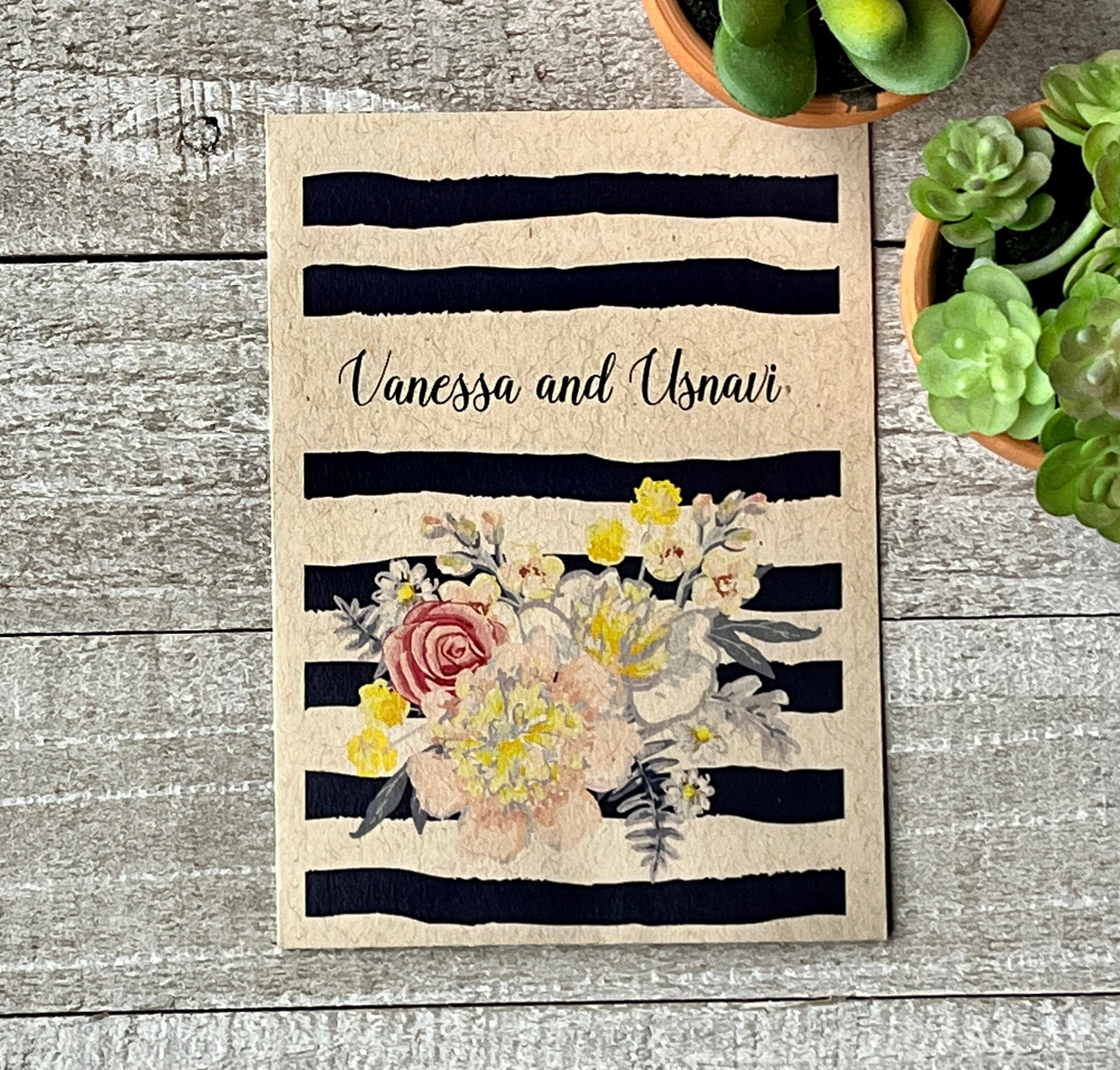
If you’ve received packets as favors and aren’t ready to plant, you don’t need to do anything fancy. A cool, dry drawer is plenty for a season or two. For more background on how these favors work, see our guide to what plantable seed packets are.
If your packets are a bit older, you can test them before you plant. It takes about a week and costs almost nothing.
A few other tips for older seeds:
If you’re ordering seed favors for an event, it helps to plan around the date. Order close enough that your guests can plant while the seeds are fresh, and tell them the best planting season on the packet or a small tag. You can design your own custom seed packets, browse our wedding collection, or check our pricing to plan ahead.
Many flower seeds stay viable for about one to three years when stored in a cool, dry place, and some last even longer. Germination slowly declines over time, so fresher seeds tend to sprout more reliably.
Often, yes. Older seeds may sprout in smaller numbers, so sow them a bit more thickly. You can also run a quick paper towel test to see how many are still viable before planting.
Keep them in a cool, dry, dark place, ideally inside a sealed jar or container. Avoid heat, humidity, and direct sunlight. Many gardeners also keep seeds in the refrigerator in an airtight container.
Seeds don’t expire suddenly. They slowly lose their ability to sprout over time. A packet that’s past its best may still grow, just with fewer seedlings.
Yes. If you can’t plant right away, store them in a cool, dry place and plant when the season is right. If you have questions about a specific packet, you can reach us through our Got Questions page.
Get 10% Off Your First Order.